













Masters in USA: Current scenario and should you be worried?


Everyone at some point in their lives has thought about settling in the United States of America and living the American dream for obvious reasons. However, this mentality has changed a bit in recent times as a result of multiple factors. Since Donald Trump took oath as the president, immigration has become tighter than ever, and people have been shifting their Future plans to immigrant-friendly countries like Canada, New Zealand, etc.
The deadly and deleterious COVID-19 has only made things more complicated as far as the USA's immigration policies are concerned. The Trump administration looks pretty determined on prioritizing American citizens before anyone and the state of the economy is expected to decline massively. This has resulted in international students who have planned for their masters rethink their plans. There are several recent developments and reports which have led to students growing more and more doubtful about their decision.
This article will dig deep into the major concerns of the students and give a holistic picture of the whole scenario. It will also help you see things more clearly and make an informed decision. Please note that the situation is not as bad or black and white as it may seem right now. There are plenty of reasons to be cheerful and optimistic about your study plans in the USA.
Here are the issues which are proving to be fearful for students planning their masters in the USA and which are or aren't a cause for concern.
1. OPT (Optional Practical Training) and the uncertainty surrounding it

OPT is a form of temporary work permission that allows international students to gain work experience in an area that is directly related to their field of study. It is valid for 36 months in the case of STEM-designated programs and for 12 months otherwise. There has been a lot of misinformation spreading recently about the cancellation of the OPT or the possibility of that.
Basically, four US senators wrote a letter to President Trump requesting him to suspend the OPT program temporarily to provide more opportunities for American citizens and give them priority over international students. One thing you should know is that there are a hundred senators in total in the USA. It was a letter written by just four of them, and the chances of it being eventually implemented are minimal. Also, the US has long been the top destination for international students, and suspending such a program is only going to repel students away from the USA.
International students contributed a whooping $45 billion in 2018 to the US economy, and no country would do anything which can potentially affect an income this huge. OPT can't just get suspended like that, and to end it is not as simple as some people may have made it sound. OPT is one of the most pivotal factors which still manages to lure students into pursuing their higher education in the US but with that gone, the country would face some severe consequences economically, and I think the people in power are well aware of that.
If looked at it logically, it makes absolutely no sense in suspending OPT and potentially harm your economy when it's as worse as it can get. It's going nowhere in my opinion, and students shouldn't be worried about this particular issue.
2. Recession and the fear of unemployment!
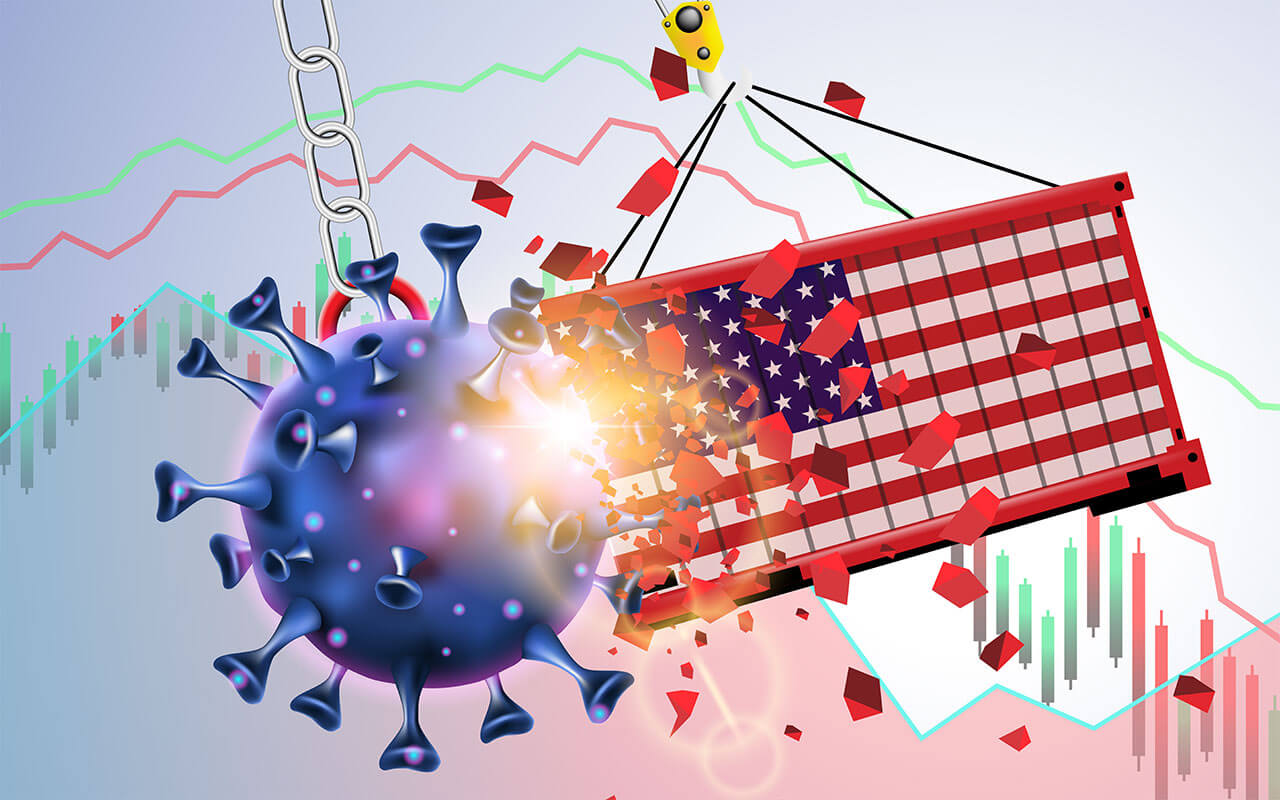
The economy of the US has been severely damaged due to the COVID-19 pandemic with the National Bureau of Economic Research announcing on Monday that the country's been in recession since February. It is expected to dip further in the coming months, and this has created a massive doubt in the minds of international students and understandably so. Getting a job after studying is a priority for a majority of students to pay off the massive loans and save some money as well.
What I would like to offer here is a different perspective. An average recession lasts for 18 months, and to be on a safer side, let's assume this recession will last for 24 months. It suggests that the economy will recover by 2022 and it'll be up and running again. The duration of a masters course is two years in most cases, which means if you graduate in the latter half of 2022 or the beginning of 2023, you won't have the issues you think you might have to find a job. This makes Spring 2021 or Fall 2021 an ideal time to go for your masters. Again, everything is an assumption at this point in time, but if the previous history is anything to go by, jobs are usually back aplenty once a recession has ended, and the great recession of 2008 is a great example.
In fact, as a result of the intensifying trade war between USA and China and growing distrust in Chinese manufacturers, there is expected to be an increase in indigenous manufacturing plants in the US to boost the economy, which will only create more opportunities in the manufacturing and related sectors.
The future typically looks pretty bleak when something like this happens out of nowhere, but if you're planning to get enrolled into a full-time program spanning two years or more in 2021, then there is little to be worried about.
3. H1-B Visa and the fear of it getting revoked

International students already had a hard time finding employers to sponsor their H1-B visa, but now after COVID-19, the situation looks to have gotten pretty tight. The unemployment number in the US is close to 40 million people now, and this has further created doubts in the minds of international students. This is an issue which is a bit concerning because even if you get an H1-B visa, the renewal process has been made more stringent under the Trump administration, and their agenda of America first is concerning many international students. But the rumors of the visa getting revoked are yet to backed up by reliable sources.
The H1-B visa is basically for skilled workers and was introduced to meet the skill shortage of native Americans in the first place. Now, this skill shortage is not going to magically disappear once COVID-19 is out of the picture. They'll still need genius minds from around the world to help America get back on track again. So I don't think this visa category is going anywhere, but a possible scenario would be a temporary travel ban on people who already have an H1-B visa but are currently not in the United States.
To conclude, it is definitely tougher even more so than before under Trump to get an H1-B visa and it's extension, but if you have a strong skill set and are confident, then there are plenty of opportunities in the US.
Now, these three aspects are the ones that are the most pertinent to the subject of discussion, but there is one more factor which could potentially affect the way students might want to approach their plans to study in the US. The Presidential elections in November 2020.
According to every poll in the US, Joe Biden is expected to beat Donald Trump to the Presidency.


Now, this is a big reason to be optimistic for every international student as the democratic party has always been an immigrant-friendly party, so some significant changes to policies that affect international students might occur. Trump has suggested in the past that he wants abroad talent in the US, but his actions have usually proved otherwise.
As the president, Joe Biden can ease a lot of tension amongst international students and make them more willing to study in the US.
CONCLUSION

In conclusion, studying in the US feels pretty daunting and uncertain right now, but the decision you make should be made keeping the above discussed things in mind. It is undoubtedly not going to be an easy path to PR as compared to countries like Canada or New Zealand for that matter. But the quality of education, cultural diversity, and cutting edge technology is what the US remains unbeaten in.
Eventually, you have to decide your priorities and make a decision accordingly because you might come up with a completely different perspective based on your situation, so there is no unilateral tip for everyone.
Do what feels right to you and just go for it and give it all you can. I hope this article helped you a bit.
Get Sample SOPs, LORs, Free GRE Study Material, Practice Questions and more after participating in
YMGrad's OFFER OF THE YEAR!
Sign Up and check your mailbox to learn more