















Scoring 150 on the Duolingo English Test in 15 days || Complete Plan, No Coaching Needed



If you're a language admirer, then you might have tripped upon Duolingo someday or the other as a user-friendly app that provides a platform to learn different languages. However, it's more than that. Yeah! You heard it right. Duolingo also offers an English language proficiency test, Duolingo English Test (DET), accepted by numerous universities.
Nowadays, the Duolingo English Test is being accepted worldwide by more than 17000 universities, thus evolving as a competitor for TOEFL and IELTS.
Before we head to the day-by-day preparation plan for DET, let's build a bedrock and tackle some FREQUENTLY ASKED QUESTIONS!
-
What all do I need for the Duolingo English Test?
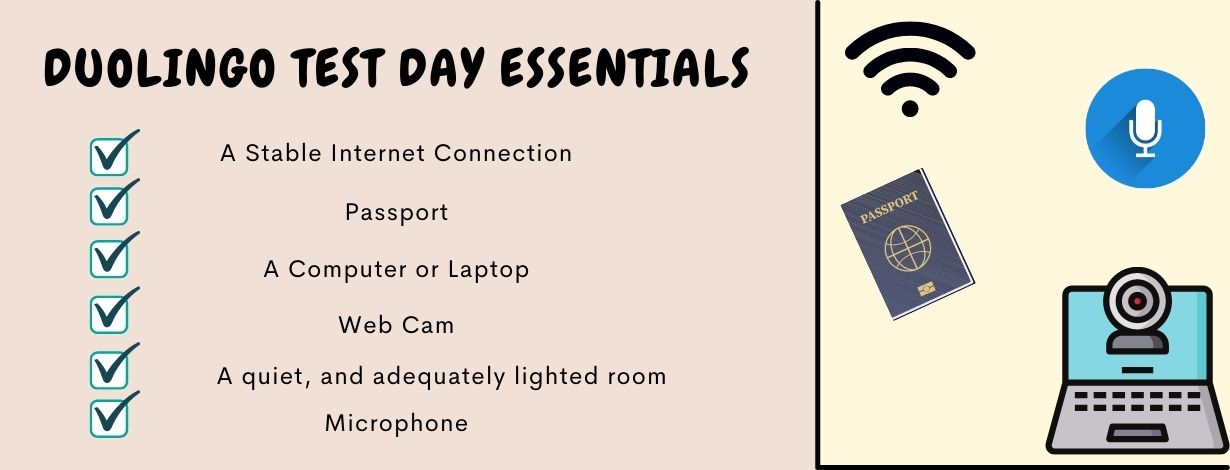
This is the most common question posed by almost every test taker. So, for the Duolingo English Test, you must have:
- A quiet, adequately lighted room
- A computer or a laptop
- Uninterrupted 60 minutes
- Passport
- A stable internet connection
-
Do I need separate computer accessories?
NO, you do not need any special computer accessories, like headphones. However, the candidate must ensure that the system must have:
- A microphone
- Speakers
- A Web-cam
-
Why is the Duolingo English Test better than IELTS or TOEFL?
One can take the test online at any preferred time and that too from any location. The test taker is not required to visit the examination center to attempt this test. The best thing is that you can take the test at your recreation, enjoying the solace of your own home.
To provide you with a better understanding of the DET, let's look at the comparison chart and figure out the pros on our own!
| PARAMETERS |
DUOLINGO |
TOEFL |
IELTS |
| Mode of Exam | Computer-based |
iBT or Paper-based at selective locations |
CBT or Paper-based |
| Test Duration |
45 Minutes (15 Minutes to setup) |
162-196 Minutes
|
164 Minutes |
| Examination Fees | $49 |
$190 (approx) |
$196 |
| Result Delivery | 2 Days |
8 Days |
14 Days (Paper-based) 3-5 Days (CBT) |
| Total Number of Sections | 2 |
4 |
4 |
| Scoring Range | Score 10-160 |
Score 0-120 |
Bands 0-9 |
| Section Names |
1. Adaptive Section 2. Video Interview |
1. Reading 2. Speaking 3. Listening 4. Writing |
1. Writing 2. Speaking 3. Listening 4. Reading |
| Time provided for Each Section | 45 Minutes in total; questions are generally not divided among sections |
Reading: 54-72 Minutes Speaking: 17 Minutes Writing: 50 Minutes Listening: 41-57 Minutes |
Reading: 60 Minutes Speaking: 11-14 Minutes Writing: 60 Minutes Listening: Approx. 30 Miins |
With this table, we can surmise that Duolingo is cost-effective compared to TOEFL and IELTS. It lasts for 45 minutes, thus making it easier for the candidates to attempt the test anytime.
-
How is the Duolingo English Test scored?
The DET gauges an individual's English language proficiency on a scale of 10-160, scored in 5 point accretions. Each certificate consists of a unique and secured link to the score certificate.
While the overall scores comprise a general description of your abilities, the subscores evaluate your proficiency in particular sections.
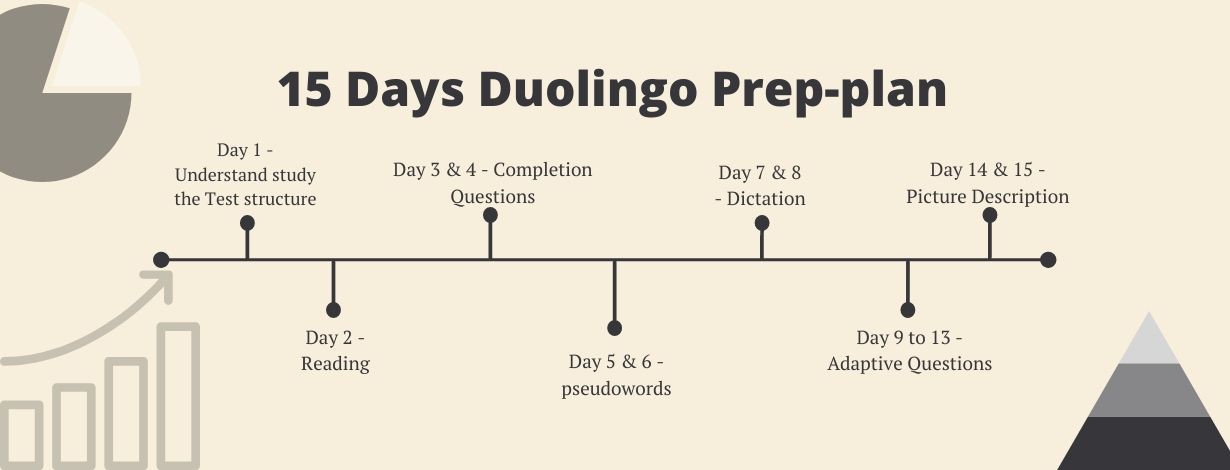
Let's make a beeline for our Duolingo day-by-day prep plan:
Day 1 - Understand the test structure.
Duolingo, in terms of the exam pattern, is entirely different from IELTS and TOEFL. Unlike them, Duolingo assesses mixed skills in every question.
The adaptive section lasts for around 45 minutes and measures your listening, writing, speaking, and reading abilities. Along with this, you will have another 10-minute long video interview to record your responses to open-ended questions.
Go through the rules and regulations thoroughly because even a slight mistake will call off your test.
Begin with decoding your strengths and weaknesses. Yes! It is one of the crucial steps. No one is perfect; you might do well in writing but lag in the speaking section as you only get a couple of seconds to plan your response. So, introspect and comprehend which section out of Reading, Writing, Listening, and Speaking would require you to put more emphasis.
To familiarize yourself with the test pattern, you can visit the Duolingo website and attempt the sample test. By taking this sample test, you can get an idea about the real test structure and experience what would be there in the actual exam. However, the sample test would be comparatively shorter, i.e., 8 minutes, but you will gain an insight into the test pattern.
The model test is free, and you can attempt it multiple times. In fact, it also shares an estimated score. Apart from this, you can also access the Official Test Guide on the Duolingo website.
PS: It is an unofficial test, which might not produce completely reliable scores. But, it is the best way to understand the test structure.
Moreover, it would be best to strengthen your time management skills as you will have only 45 minutes, and you will be tested on multiple aspects. In order to refine your time tracking capabilities, you should make constant efforts and practice on a daily basis with a timer on.
Now, here comes the primary task of the day! Grab a journal and pen the types of questions. This is one of the decisive parts as Duolingo has around 10 different question types. Therefore, it is better to checklist the types. Once you've done this, you can mark a tick so that no sort of question is left unpracticed.
Tired of searching GRE-specific wordlist? Don't worry! Signup for YMGrad Official GRE Dictionary and enrich your vocabulary!
Day 2 - Practice Reading & Pronunciation drill
Duolingo has specific questions that you might not come across during other tests. One of them is based on reading the words visible on your computer screen and reciting them aloud.
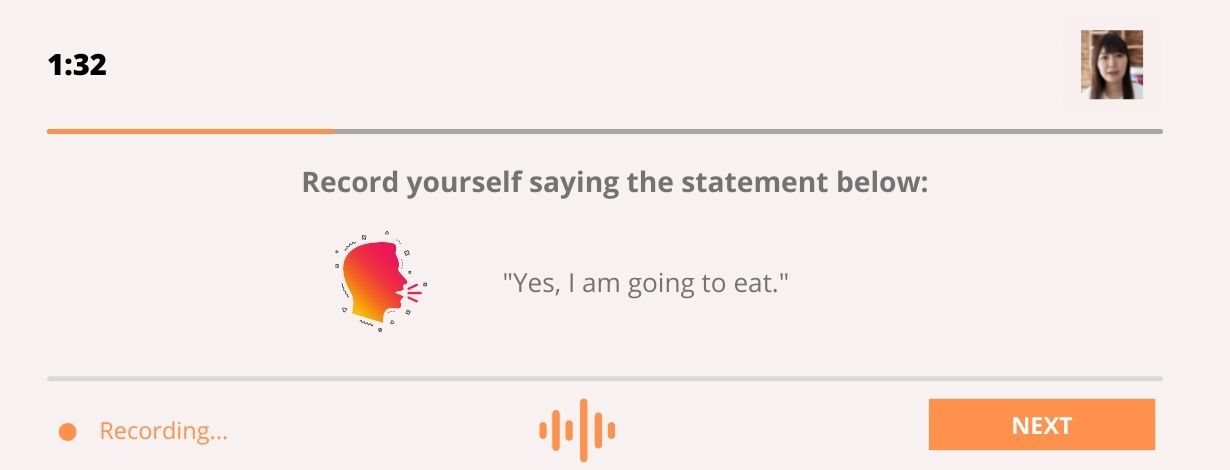
Let us better understand this with the help of an example:
A couple of words and phrases will appear on your screen during the test, and you will have to read them. The question might be in the following format:
Record yourself saying the words and statements below:
1. Adventurous
2. Entrepreneurship
3. Yes, I am going to study.
4. No, I did not read that message earlier.
5. Are you serious about leaving the job and moving to the countryside?
While answering these questions, it is best to employ Intonation. Intonation is varying the pitch of your voice and how you read the phrase. For instance, suppose "Yes, I will eat" appears on the screen. So, while speaking, you should stress 'yes.'
NOTE: Whatever text appears on the test screen, you should read it as it is. That implies not using the contraction.
This can be comprehended easily with the following example:
If the phrase is "I am working since 2 pm", in this case, you should say 'I am ' and not 'I'm.'
Also, as we are expected to read the text, Duolingo will keep in consideration our pronunciation as well. You might be contemplating 'How to enhance pronunciation?'
There are multiple ways to work upon your pronunciation, out of which one is searching the word online and listening to it. Additionally, watching tv-series and movies in English will help you get accustomed to the native dialect and correct pronunciation.
It is advisable to spare 10-15 minutes daily and practice reading & pronunciation throughout the preparation phase.
Day 3 & 4 - Practice Completion questions
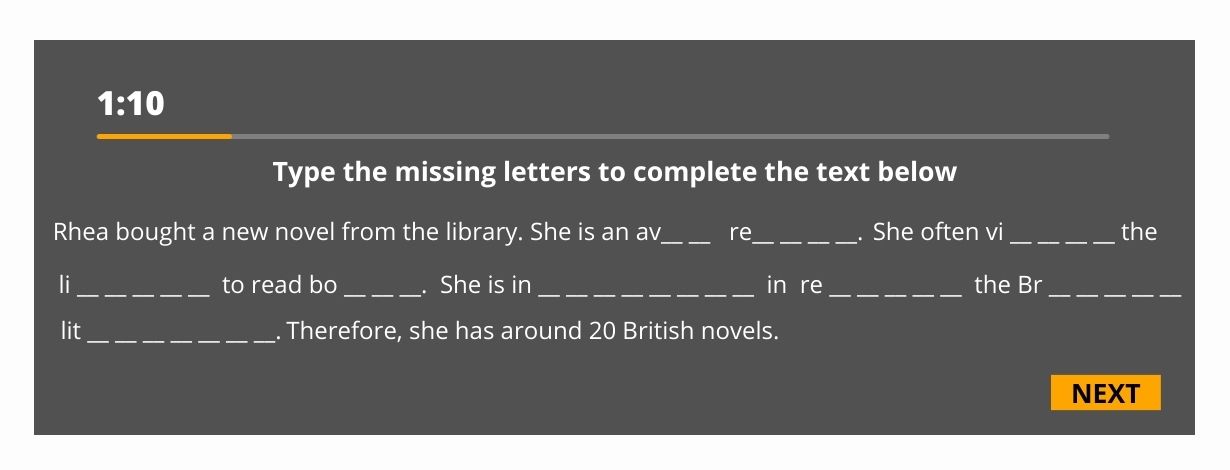
These questions are designed to measure a candidate's reading aptitude. The first and the last sentences will have a regular structure, while some words in-between the rest of the statements are "cracked" by removing the latter part of the word.
The applicant responds to these questions by completing the broken words in the passage. The main challenge that arises while attempting these questions is that one needs to depend upon context and audio to reconstruct the broken words.
To be specific, this section assesses a test taker's spelling skills.
Day 5 & 6 - Prepare yourself against pseudowords.
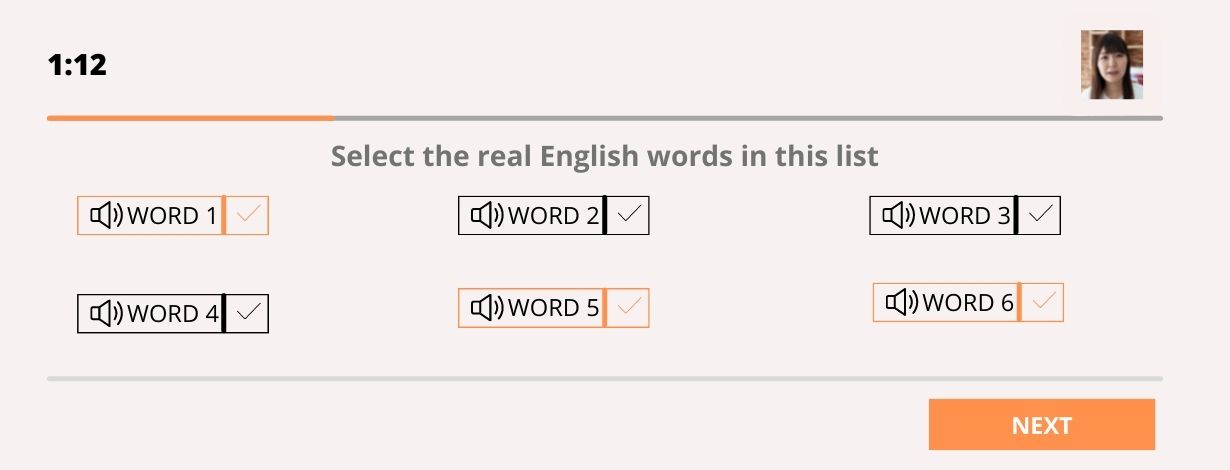
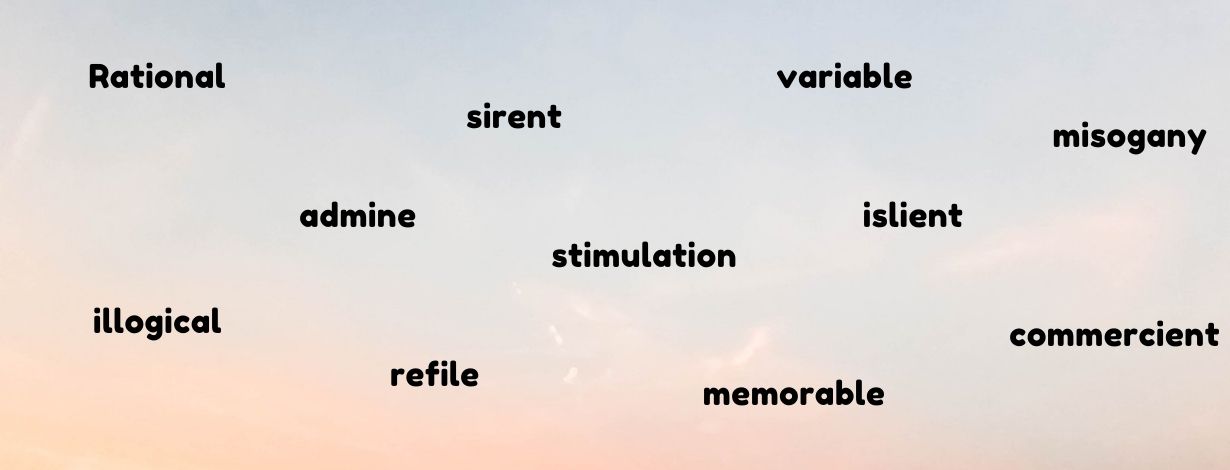
The most confusing questions would be those which demand selecting the actual English words. In these questions, you will be given a list of words that are either not a part of the English language or exist both in English and some other language. Now, you would have to distinguish between native English words and foreign words.
This part might be challenging as there will be words that most of us use in daily English conversation, but they are actually a part of the non-native English vocabulary.
You will be given a set of English words combined with pseudowords (fake words) that might appear as English vocabulary. Such terms are used to gauge your vocabulary understanding at different Common European Framework of Reference for Languages (CEFR) parameters. The CEFR categorizes language proficiency in six levels, A1 to C2, which can further be grouped into three broad classes: Beginner, Independent, and Proficient user. Moreover, the text is used to anticipate your language proficiency skills in the listening, reading, and writing sections. On the other hand, the spoken version forecasts your speaking and listening skills in particular.
Day 7 & 8 - Practice Dictation
In these questions, you will have to listen to an audio clip and write down what you heard. Further, in this exercise, the candidate listens to a spoken sentence or a brief passage and then types it using the keyboard. You will have 60 seconds in total to listen and transcribe what you heard.
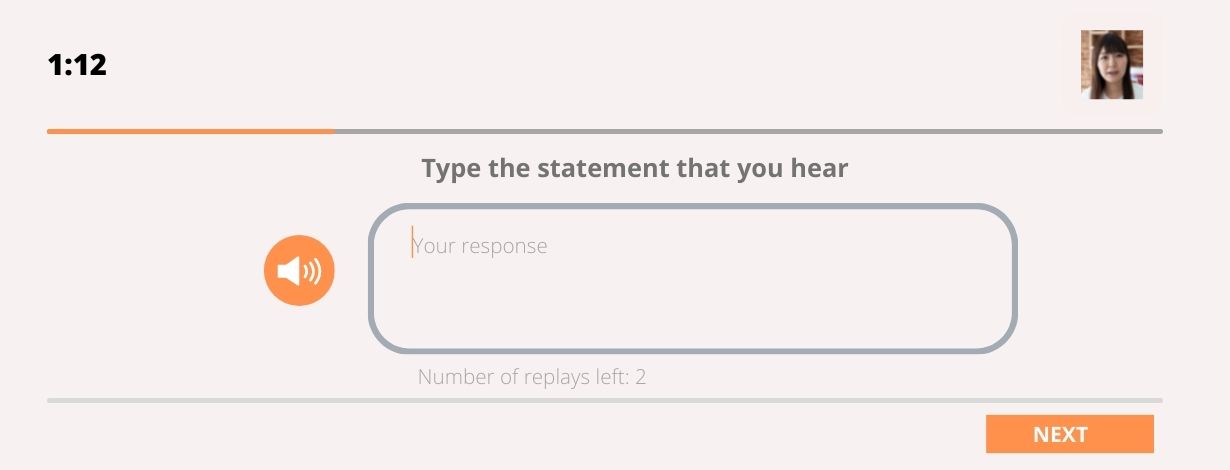
The audio can be played up to three times.
This part basically assesses a candidate's ability to identify different words and retain them in memory for a comparatively longer duration to write them accurately.
How to prepare the Listen and Type section?
The best route to practice dictation is listening to podcasts and transcribing all you heard. Additionally, you can cross-check your write-up by reading the transcription.
PS: Pay close attention to idioms and unfamiliar turns of phrases as these are commonly tested in this section.
Have you turned into an All-Nighter to draft your statement of purpose? Allow us to ease your burden - get an exquisite SOP prepared by our professionals!
Day 9 - Read, then write!
In this module of the Duolingo English Test, you primarily need to read a brief paragraph and then answer the subsequent question. Your proficiency level determines whether the question will be shorter or longer.
What skills do you need to ace this section?
On a broader note, this section assesses your grammatical, reading, vocabulary, and writing competencies. Therefore, you need to showcase your proficiency not only in writing & reading but also in vocabulary & grammar.
Let us look at a sample question!
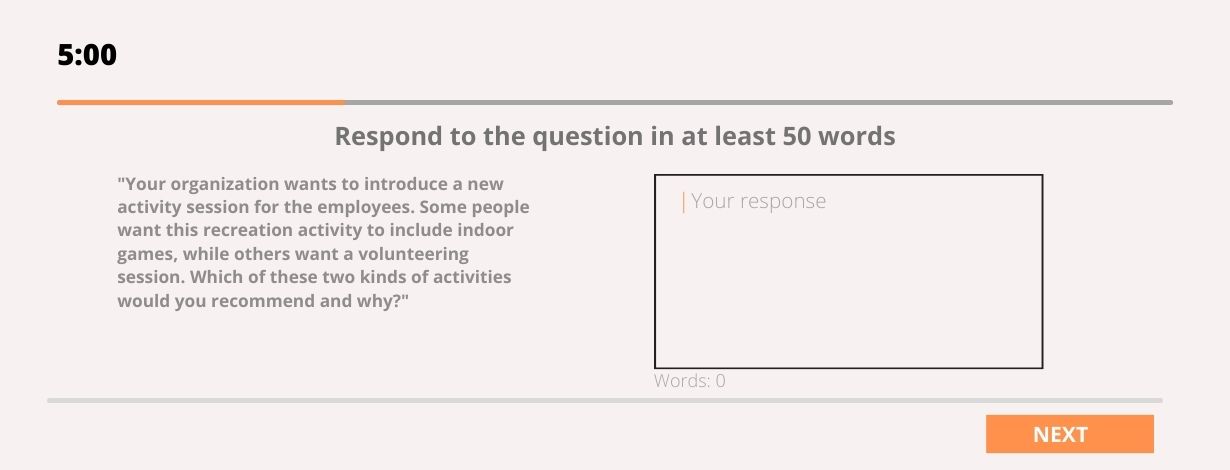
"Your organization wants to introduce a new activity session for the employees. Some people want this recreation activity to include indoor games, while others want a volunteering session. Which of these two kinds of activities would you recommend and why?"
Now, in these types of questions, you are required to write 50-100 words on the given prompt.
In order to attempt this question, the best strategy is, to begin your write-up with a thesis statement. Now, you would be pondering over what is a thesis statement? The Thesis Statement is nothing, but a general sentence that shares your viewpoint. Once you've framed the thesis sentence, the next step is to elaborate and advance your opinion with supporting details and examples. As we have time constraints, the supporting point should be limited to a maximum of 2 sentences.
Day 10 - Read, then speak!
Generally known as the Extended Speaking task, this section measures a candidate's English speaking abilities, requiring them to speak for an extended period.
You will have a maximum of 20 seconds to prepare and then speak for at least 30 seconds to a maximum of 90 seconds.
This cue card round will be storytelling for you as you are supposed to narrate an incident most of the time. The following are the type of cue-card questions:
1. Favorites/Interest - Talk about the things you like.
2. Person - Talk about a friend, role model, or mentor.
3. Time-based - Monologue on past, present, or future events.
4. Object/Article - Talk about a gift, gadget, or clothes.
5. Place - Describe the places you already visited or intend to visit.
6. Work/Study - Talk about your job, any project, or workplace.
7. Emotions - Describe any moment of joy or event you felt sadness.
8. Occassions - Talk about any memorable event or a party.
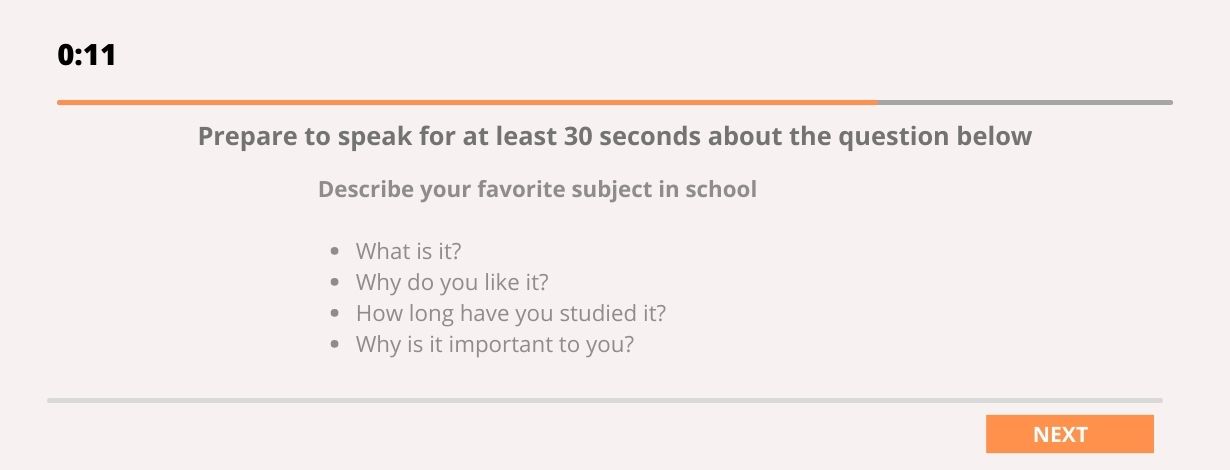
Do not skip any item listed in the cue card prompt, as you will lose points for that.
Here, during this task, it is recommended to begin with planning. It will help if you refrain from using filler words like umm, uhh, etc.
Include examples wherever possible so that the evaluator can understand that you are not just answering the question prompt but also relating it to your life and experiences.
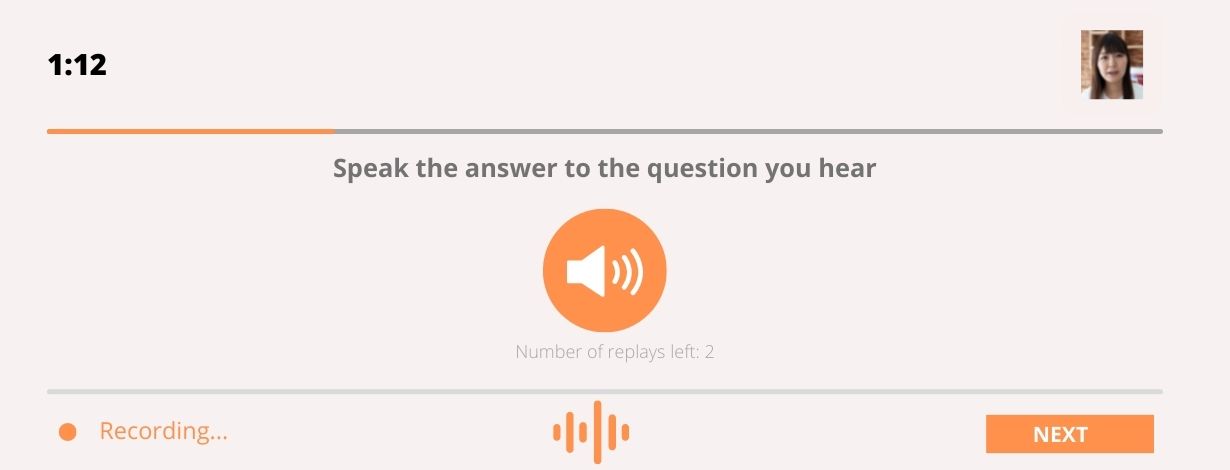
Day 11 - Listen, then speak!
This task presents you with an Aural Prompt, where you will listen to audio and speak about the same for at least 30 seconds. However, I suggest you continue for a minimum of 75 seconds.
Here, not only your speaking skills will be assessed, but also your listening. Further, it will evaluate your proficiency in grammar, word selection, and fluency, along with your ability to respond well to the question.
How to prepare for the Aural task?
In order to prepare this module, the best way is to listen to American podcasts to enhance your listening aptitude. Afterward, you should attempt to speak for at least an extended period of 75 seconds.
During the speaking module, the main thing to consider is that you should have a good grasp of vocabulary and avoid making any pronunciation mistakes.
It is common for test-takers to receive their questions, and instead of weaving a good story, they attempt to answer each prompt separately. Majorly, the problem here is that once they have responded to all the prompts, there are still a couple of seconds left, but they have nothing more to say.
It is advisable to utilize the prompts for reference and weave a story around the same.
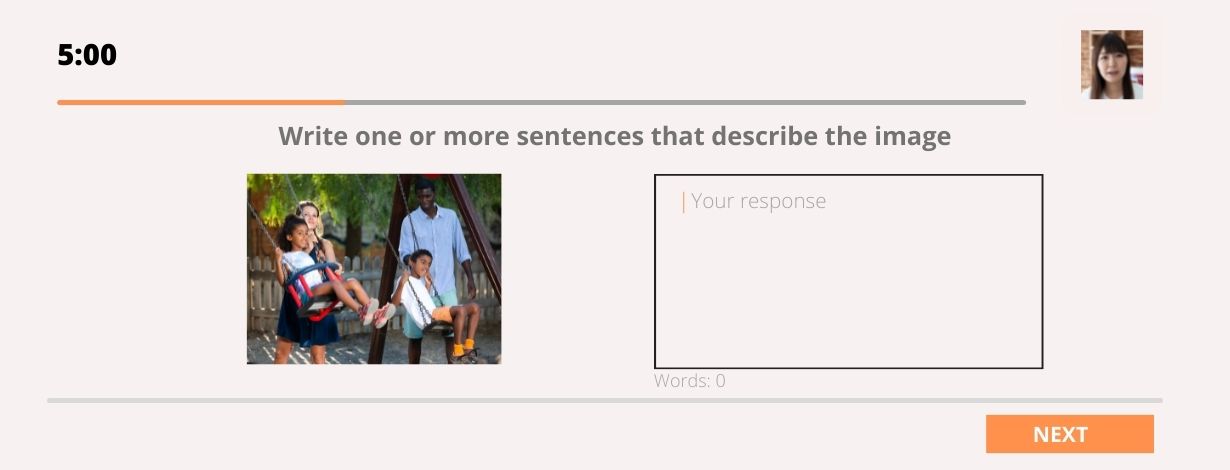
Day 12 & 13 - Practice Picture Description
The picture description task requires a candidate to describe the picture. The image description task is of two types: Written and Aural.
While in the writing section, you have to write about the image; on the other hand, in the aural section, a candidate must verbally describe it.
Although it might seem easy to speak about an image, it can be the opposite if you do not preplan your monologue. Therefore, take 5-6 seconds to plan out your speech quickly.
Please do not spend more than 10 seconds planning your monologue, as it will impact your scores.
We made it till the final day! So, let's the structure that will help you score decent points in the picture description section?
The first step is to begin with describing the foreground, which is indeed the most crucial part. Later on, move to the background of the image and make some hypotheses.
What are hypotheses? If this is going on in your mind, then let me tell you Hypothesis is the assumptions based on your understanding of what is going on in the image.
Avoid the fillers as much as you can, as not only do they make you sound less confident, but they negatively impact your scores.
Moreover, do not label the image. By now, you would be wondering what is labeling the image? It is describing what are the articles in the image using simple sentences like 'There is a car in front of the tree,' 'There is a small girl,' or 'The care is white.'
Describe the emotions that are there in the picture as it will enhance your monologue and will also provide you with additional things to say.
Day 14 & 15 - Complete Revision
Finally, we have learned about all the question types! Having practiced each of them, the last 2 days shall entirely be devoted to complete revision. The best approach is to practice sample papers and the model test provided on the Duolingo website.
The following books can be used to practice sample papers:
In a nutshell,
Now that you have our day-by-day prep plan for Duolingo, I hope that it will help you ace the test. This prep plan is specifically designed after brainstorming sessions and practical implementation during the test; however, it can be altered as per your proficiency. But, have my words; if you follow this plan with diligence, I am sure that you will outshine during the test.
Let us focus on the nitty-gritty of your application, while you focus on acing the Duolingo Test!